

Outsourcing Medical Narrative Summaries |
Author Name: Melissa Andrews |
Medico-Legal Review Specialist
|
Published Date: 03 August/2026
Personal injury and
medical malpractice cases
live and die on the medical record. But a
2,000-page chart doesn't win a case by itself
- someone has to turn it into a clear,
chronological story a judge, adjuster, or
jury can follow. That story is the medical
narrative summary,and it's one of the first
tasks firms look at
outsourcing medical narrative summaries as caseloads grow past
what an in-house team can chronologize without
falling behind on everything else.
The decision usually comes up at a specific
moment: a
mass tort intake spikes, a med mal
case lands with a decade of treatment history
attached, or a paralegal who used to turn
summaries around in two days is now three weeks
behind. At that point, the question isn't whether
the work needs to get done — it's who should be
doing it, and what happens to case strategy if
the wrong vendor gets it wrong.
This guide covers what a narrative summary
actually includes, what a reliable outsourcing
partner looks like versus a risky one, how the
outsourcing process typically works from intake
to delivery, the mistakes that cause the most
damage when firms outsource this work carelessly,
and when handing it off makes the biggest difference
to case strategy and the bottom line.
Table of Contents
- Medical Record Retrieval Services for Attorneys
- Why Attorneys Outsource Medical Record Retrieval
- How Our Medical Record Retrieval Process Works
- What to Look for in a Medical Record Retrieval Company
- Medical Record Retrieval Services for Law Firms & Lawyers
- Medical Record Retrieval Cost for Attorneys
- Frequently Asked Questions
- Conclusion
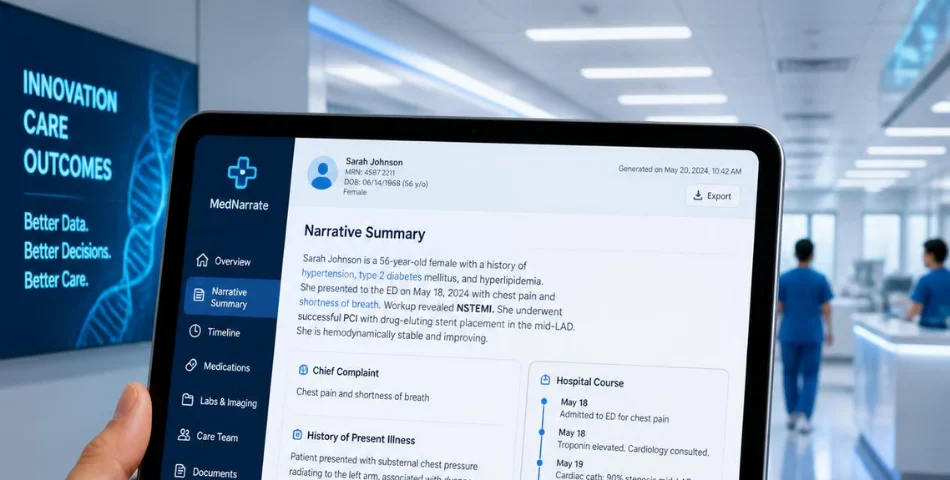
What Is a Medical Narrative Summary - And Why It Matters
A
medical narrative summary condenses raw
medical records into a chronological,
plain-language account of a patient's treatment
history. Instead of asking an attorney or paralegal
to read hundreds of pages of provider notes, lab
results, imaging reports, and billing codes, a
well-built narrative summary surfaces what actually
matters to the case: diagnosis timelines, treatment
gaps, pre-existing conditions, and findings relevant
to causation and damages.
It's different from a raw
medical chronology, which simply lists events in date order, and
different again from a medical record index,
which just catalogs what documents exist. A
true narrative summary interprets the record -
it tells the reader what happened medically,
in what order, and why it matters to the legal
theory of the case. That interpretive layer is
what makes it usable by someone who isn't a clinician.
For firms handling personal injury,
medical malpractice, or mass tort
caseloads, this document often becomes
the backbone of demand letters,
deposition prep, expert witness consultations, and
settlement negotiations. A well-written
summary can shave hours off deposition
prep alone, because the attorney walks in
already knowing which page of which chart
supports which argument.
The Real Cost of Keeping Narrative Summaries In-House
Building narrative summaries internally sounds
like the safer option, but the actual cost
shows up in attorney and paralegal hours rather
than a line-item invoice. High-volume PI and
mass tort practices routinely see record sets
that run into the thousands of pages per case,
spread across multiple providers, hospital systems,
and years of treatment. Every hour spent manually
chronologizing charts is an hour not spent on
strategy, negotiation, or trial prep — the work
that actually moves a case toward resolution.
There's also a quality-control cost that's
easy to underestimate. Associates and
paralegals doing this work between other
case responsibilities are more likely to
miss a treatment gap buried on page 340 of
an EMR export, or fail to flag a pre-existing
condition that opposing counsel's expert will
find first. A missed detail in a narrative summary
doesn't just cost time later - it can weaken a
causation argument or undercut a damages claim
months down the line, often after the window to
catch it has closed.
This is the calculation that pushes most
firms toward outsourcing medical narrative
summaries: not because the in-house team can't
do it, but because a specialized reviewer, doing
this work exclusively and at volume, can do it
faster and more consistently, at a lower blended
cost, without pulling billable attorney time off
the case.
How the Outsourcing Process Typically Works
Firms new to outsourcing narrative summaries are often unsure what the actual workflow looks like once records leave the office. In practice, the process generally follows five stages:
- Secure Intake: Medical Records are transmitted through an encrypted, HIPAA-compliant portal rather than email attachments
- Indexing and Organization: Pages are sorted by provider, facility, and date to build the raw chronology
- Clinical Review: A physician or clinically trained reviewer reads the organized chart and drafts the narrative, flagging causation- and damages-relevant findings
- Quality Assurance: A second reviewer checks the summary against the source records for accuracy and completeness before delivery
- Quality Assurance: A second reviewer checks the summary against the source records for accuracy and completeness before delivery
- Delivery and Follow-up: The finished summary is returned in the firm's preferred format, with the vendor available to answer follow-up questions about specific findings
Law firms should ask a prospective vendor to walk through each of these stages before signing on, since a vendor that skips the quality-assurance step is the one most likely to produce a summary that needs to be re-checked internally anyway - which defeats the point of outsourcing in the first place.
What to Look for When Outsourcing Medical Narrative Summaries
Not every vendor produces litigation-ready work, and the market includes everything from single-person transcription shops to firms with full clinical review teams. Before handing off records, confirm a provider offers:
- Physician or clinically trained reviewers not just administrative summarization or generic data entry
- A consistent, chronological format with flagged causation- and damages-relevant findings, not just a page-by-page recap
- HIPAA-compliant handling, storage, and transmission, backed by a signed Business Associate Agreement
- Clear turnaround commitments that match litigation deadlines, including rush options for time-sensitive filings
- A named point of contact who can answer questions about a specific finding after delivery not a support ticket queue
- The ability to scale from a single-case summary to mass tort volume without a drop in accuracy or consistency
It's worth asking for a sample summary on a redacted or anonymized record set before committing to a full engagement. A vendor confident in their work will provide one without hesitation, and it's the fastest way to evaluate reviewer quality before a real case is on the line.
Is AI Enough, or Do You Need a Human Reviewer?
AI tools are increasingly used to index
and organize large record sets, and they
can meaningfully speed up the front end of
the process - sorting pages, flagging
duplicates, extracting dates, and building a
rough timeline in a fraction of the time manual
sorting would take. For high-volume mass tort
intake, that alone can be worth adopting.
But an AI medical records summary is not
the same as a litigation-ready narrative
summary. Clinical significance - what a
specific lab value, a gap in treatment, or
a provider's handwritten note actually means
for the case - still requires review by someone
with medical training. AI models can miss context
that's obvious to a clinician, like a treatment
gap that reflects a scheduling issue rather than a
lapse in care, or a lab result that reads as
unremarkable in isolation but signals something
important given the rest of the chart.
The firms getting the best results treat AI
as a first pass, not a final product: it
accelerates indexing and rough chronology,
and a licensed reviewer validates, corrects,
and finalizes the narrative before it reaches
the case file. Any vendor who claims a fully
automated summary is litigation-ready without
human clinical review is a vendor worth being
skeptical of.
What a Strong Medical Records Summary Template Includes
A dependable medical records summary template gives every case the same reliable structure, which matters when summaries are being handed between paralegals, associates, and outside counsel over the life of a case. At minimum, it should include:
- A chronological treatment timeline from first visit through current status
- A provider and facility index, so any finding can be traced back to its source document
- Diagnosis and injury history, including pre-existing conditions that opposing counsel is likely to raise
- Identified treatment gaps and their potential impact on causation arguments
- A flagged section highlighting findings most relevant to liability and damages
- Page and exhibit references tying every summarized finding back to the underlying record
Common Mistakes Firms Make When Outsourcing This Work
A few recurring mistakes show up when firms outsource narrative summaries without a clear vetting process:
- Choosing a vendor on price alone, without confirming clinical review is actually part of the process
- Skipping the sample-summary step and discovering formatting or accuracy issues only after a real case is already at risk
- Not confirming a signed Business Associate Agreement is in place before transmitting protected health information
- Treating the summary as a final product rather than spot-checking it against source records on the first few engagements with a new vendor
- Failing to standardize the request across cases, which makes it harder to compare vendors or catch a drop in quality over time
Most of these are avoidable with a short intake checklist and a first-case trial run before committing to a long-term vendor relationship.
When Outsourcing Makes the Biggest Difference
Outsourcing tends to pay off fastest in a
few specific scenarios: mass tort cases
where dozens or hundreds of plaintiffs
generate near-identical record sets and
consistency across summaries matters as
much as accuracy within any one of them;
medical malpractice cases where a single
overlooked note in a decade of treatment
history can undercut a causation argument;
and any high-volume PI practice where attorney
time is better spent on negotiation and trial
prep than on manual chart review.
In each of these situations, a specialized
narrative summary provider isn't just saving hours -
it's reducing the risk of a missed detail that
changes the outcome of the case. That risk
reduction is often the more valuable part of
the equation, even though it's harder to put
a number on than the hours saved.
The Bottom Line
Outsourcing medical narrative summaries isn't about handing off case strategy - it's about freeing up attorney time for the parts of the case that actually need an attorney. The right partner combines physician-level review, a consistent, traceable template, HIPAA-compliant handling, and a transparent process from intake to delivery, so your team gets a summary they can hand straight to a demand letter, deposition, or expert consult without a second round of internal review.
Frequently Asked Questions
What is a medical narrative summary?
A medical narrative summary is a chronological, physician-reviewed account of a patient's treatment history that translates raw medical records into plain-language, case-relevant findings for attorneys.
Is AI used to create medical narrative summaries?
AI tools can help organize and index large record sets, but clinically significant findings still require review by a licensed medical professional before a summary is litigation-ready.
What should a medical records summary template include?
A strong template includes a chronological treatment timeline, provider and facility index, injury and diagnosis history, treatment gaps, pre-existing conditions, and a flagged section for causation-relevant findings.
How long does outsourcing a narrative summary take?
Turnaround depends on record volume, but most outsourced narrative summaries for personal injury or medical malpractice cases are delivered within 3 to 10 business days.
What is the difference between a medical chronology and a narrative summary?
A medical chronology lists treatment events in date order. A narrative summary goes further, interpreting the record to explain what happened medically and why it matters to the case's legal theory.
About the Author
Melissa Andrews | Healthcare Marketing &
Medico-Legal Review Specialist
Melissa Andrews is a seasoned healthcare
marketing professional with more than 10 years of
experience in the medical and medico-legal industry.
Specializing in bridging the gap between clinical expertise
and legal practice, she has dedicated her career to helping
attorneys and law firms across the USA navigate the
complexities of medical record review for litigation.
Melissa has deep hands-on expertise supporting legal
teams across a wide range of practice areas — including
Personal Injury, Medical Malpractice, Mass Tort, Workers'
Compensation, Nursing Home Abuse, and Product Liability
cases. Her insights into HIPAA compliance, AI-assisted
record review, and medico-legal documentation standards
make her a trusted voice for law firms seeking accuracy,
efficiency, and compliance in their case preparation.